
Winter can be a difficult time of year. For many of us, the shorter, darker days and colder weather make it harder to get out of bed, spend time outdoors, and maintain the routines that usually help us feel balanced and energised.
Alongside this, the winter months can bring additional pressures: end-of-year deadlines, social expectations, financial stress, loneliness, or simply the emotional impact of another year coming to an end. It’s therefore not unusual to feel more tired, irritable, emotionally sensitive or demotivated during this time of year.
Rather than waiting until January to focus on your wellbeing, autumn and winter can be an important time to slow down, check in with yourself and think more intentionally about what supports you.
In this article, we’ll explore the difference between the “winter blues” and seasonal affective disorder (SAD), why winter can affect mood and energy levels, and 8 ways to support your wellbeing during the colder months.
Winter blues vs seasonal affective disorder (SAD)
People often use the terms winter blues and seasonal affective disorder (SAD) interchangeably, but there are some important differences between them.
The winter blues describe a temporary dip in mood or energy during the colder months. You may feel more tired, less motivated, or emotionally flat, but you are generally still able to function in your day-to-day life. While unpleasant, these changes can often be supported through lifestyle adjustments and increased self-care.
Seasonal affective disorder (SAD), sometimes referred to as “winter depression”, is a subtype of depression that follows a seasonal pattern, most commonly becoming more severe during autumn and winter.
Symptoms of SAD are similar to general depression and can include:
persistent low mood
loss of interest or pleasure
fatigue
changes in sleep and appetite
hopelessness
For some people, symptoms become severe enough to significantly impact day-to-day functioning and work, studies, relationships and overall wellbeing.
Treatment for SAD may include:
light therapy
talking therapy
medication
lifestyle changes and increased support
It’s normal to feel low or tired at times during winter, but if these feelings persist or begin affecting your ability to cope, it’s important to seek support from your GP or a mental health professional.
Why can winter affect mood and energy levels?
Researchers do not fully understand why some people struggle more during winter than others, but several biological and psychological factors are thought to play a role.
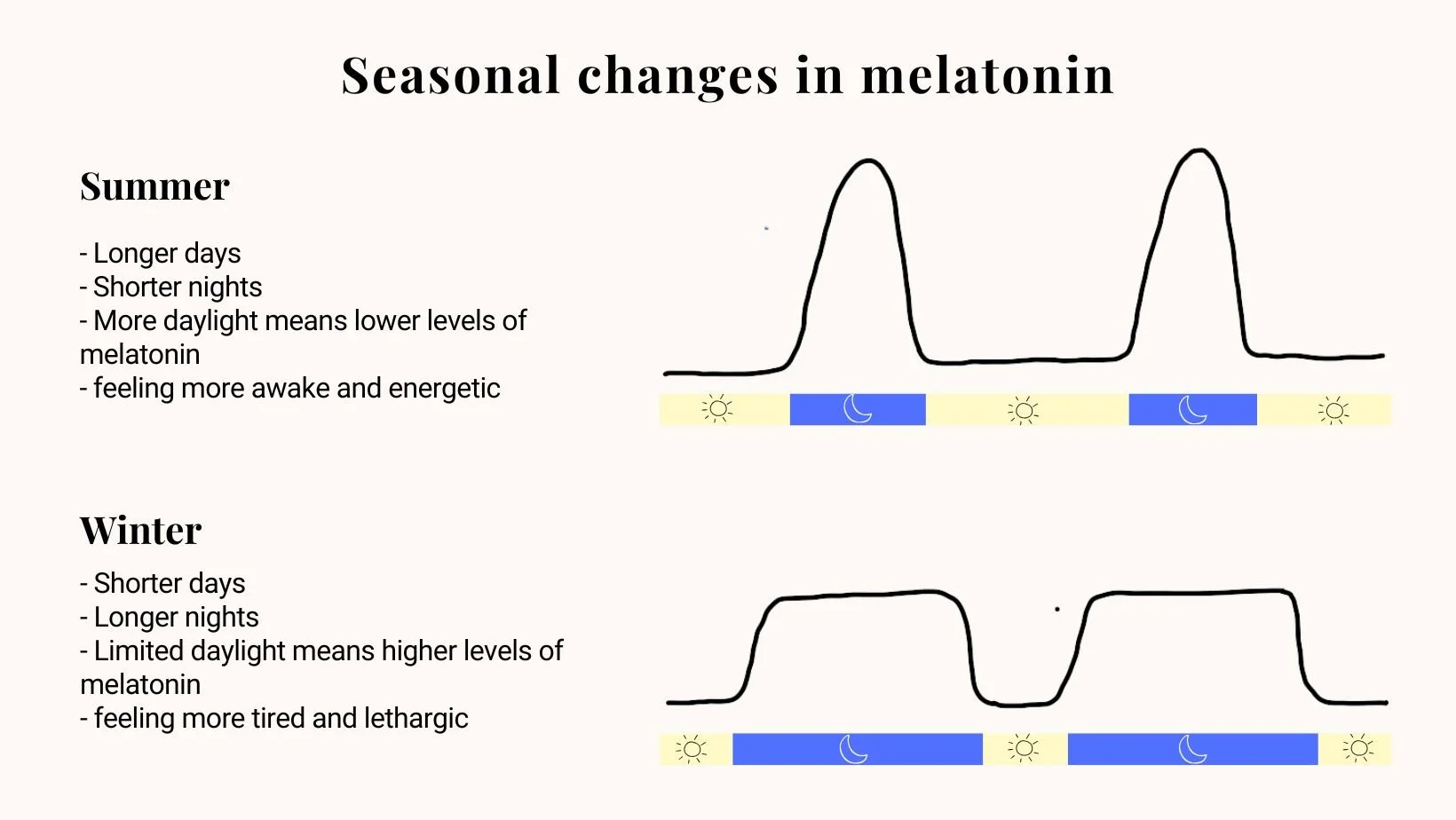
One factor is reduced daylight exposure. Shorter days can increase levels of melatonin, a hormone involved in regulating sleep and the body’s internal clock (circadian rhythm). Higher melatonin levels may contribute to increased tiredness, sluggishness and changes in sleep patterns during winter.
Another factor may involve serotonin, a neurotransmitter linked to mood, sleep and energy regulation. Serotonin is dependent on vitamin D, something we mainly get from sunlight. When there’s less sunlight, there’s also less vitamin D and serotonin which can contribute to lower mood and energy levels.
Winter can also affect us psychologically and emotionally. Seasonal transitions require adjustment, and adjustment takes energy. The colder months may bring changes to routines, social life, movement, motivation and daily structure. Winter can also evoke feelings of loss, noticing the leaves falling from the trees, a reduction in activities or another year coming to an end.
For expats and international students, winter can be especially challenging when the climate, culture and seasonal traditions are very different from home. This can intensify feelings of homesickness or loneliness.
Looking after your mental health during winter
If you notice a link between seasonal changes and how you feel, these ideas may help support your wellbeing during the colder months.
1) Make the most of natural light
As we saw earlier, sunlight plays an important role in regulating sleep, mood and energy levels. Try to maximise your exposure to daylight where possible, for example by opening curtains early in the day and sitting near windows when working or studying.
If natural light is very limited where you live, you might consider using a light therapy lamp (sometimes called a SAD lamp), which mimics daylight.
It can also help to pay attention to vitamin D intake during winter through food or supplements where appropriate. If you think you may be deficient, speak with your GP.
2) Spend time outdoors
Even when the weather is grey or cold, spending some time outside can still make a difference. Fresh air, movement and exposure to daylight can help support mood, energy and mental clarity. Nature can also have a calming and regulating effect on the nervous system.
3) Keep moving
During winter, many people find it harder to maintain regular movement or exercise routines. However, physical movement can have a significant impact on emotional wellbeing, stress regulation and energy levels.
Choose a form of movement that you enjoy and is sustainable. You don’t have to stick to traditional forms of exercise if you don’t like them - you can think out of the box! For example, walking your (neighbour’s) dog, dancing to your favourite playlist, going iceskating, raking leaves or shovelling snow, or finding a cosy stretching video online.
Having an “exercise buddy” or joining group activities can also help with motivation and connection during the darker months.
4) Plan meaningful and enjoyable activities
When people feel stressed, low or overwhelmed, pleasurable activities are often some of the first things to disappear. At the same time, withdrawing from activities that bring meaning, enjoyment or connection can unintentionally worsen low mood and isolation.
It can therefore help to intentionally schedule activities that:
feel nourishing
create enjoyment
bring a sense of achievement
support connection with others
You may find it helpful to notice:
Which activities leave you feeling more energised or connected?
Which ones leave you feeling more depleted?
In Gestalt therapy, increasing awareness of how different experiences affect us can help us make choices that are more supportive of our wellbeing.
5) Stay connected
Human connection plays an important role in emotional wellbeing.
During winter, particularly when energy or motivation is low, it can be tempting to isolate yourself or withdraw socially. However, maintaining meaningful contact with others can help reduce loneliness and emotional disconnection.
Small forms of connection still matter:
meeting a friend for coffee
joining a class or community group
calling family
studying or working alongside others
Connection does not always need to be large or highly social to be meaningful.
6) Maintain some structure and routine
The colder, darker months can make it tempting to stay in bed longer, cancel plans or lose daily structure. While rest is important, losing routines entirely can sometimes increase lethargy and low mood.
Try maintaining some consistency around your sleep, meals, movement, work/study routines and social contact, as this can help create a greater sense of stability and predictability during seasonal changes.
7) Prioritise sleep and rest
Sleep plays a central role in both physical and mental wellbeing. Too little sleep can affect mood, concentration and emotional regulation, while oversleeping can sometimes increase feelings of sluggishness or low mood and interfere with work/study responsbilities and socialising.
Good sleep habits, also known as “sleep hygiene” may include:
limiting caffeine later in the day
reducing screen use before bed
having a calming evening routine
keeping relatively regular sleep and wake times
8) Notice what you’re grateful for
Research suggests that practising gratitude can support wellbeing and help broaden our awareness of positive experiences. At the same time, gratitude should not become another pressure or form of toxic positivity. Rather than forcing yourself to “feel grateful”, it may help to simply notice small moments that feel comforting, meaningful or supportive:
Your morning coffee
sunlight through the window
a conversation with a friend
Sometimes wellbeing begins with noticing what is already here.
Takeaway
Winter often asks us to slow down and adapt in ways that are not always easy in cultures that value speed and productivity. What can help is to bring attention to how this season is for you physically, emotionally and relationally to understand what (self) care looks like at this time of year. If low mood or SAD persists, seeking professional support can be an important part of that care.
Resources
Book: Wintering: The Power of Rest and Retreat in Difficult Times by Katherine May
Article:Do Our Nutritional Needs Change as We Move Into Fall and Winter? Short Answer: You Bet by Sharon Feiereisen for Well + Good
Article: Sleep Hygiene by Eric Suni for the Sleep Foundation
TedTalk: Pay attention to your body’s master clock by Emily Manoogian
References
Munir, S., & Abbas, M. (2022). Seasonal Depressive Disorder. In StatPearls [Internet]. StatPearls Publishing.
Seasonal Affective Disorder article by the National Institute of Mental Health
Holt-Lunstad, J. (2021). Loneliness and social isolation as risk factors: The power of social connection in prevention. American Journal of Lifestyle Medicine, 15(5), 567-573.
Goldstein, A. N., & Walker, M. P. (2014). The role of sleep in emotional brain function. Annual review of clinical psychology, 10, 679.
Ohayon, M. M., Reynolds III, C. F., & Dauvilliers, Y. (2013). Excessive sleep duration and quality of life. Annals of neurology, 73(6), 785-794.
Article: Is Sleeping In on Weekends Good for Your Health? by the American Heart Foundation
Wong, Y. J., Owen, J., Gabana, N. T., Brown, J. W., McInnis, S., Toth, P., & Gilman, L. (2018). Does gratitude writing improve the mental health of psychotherapy clients? Evidence from a randomized controlled trial. Psychotherapy Research, 28(2), 192-202.
Rash, J. A., Matsuba, M. K., & Prkachin, K. M. (2011). Gratitude and well‐being: Who benefits the most from a gratitude intervention?. Applied Psychology: Health and Well‐Being, 3(3), 350-369.