
What is imposter syndrome? Understanding why you feel like a fraud
“I don’t belong here.”
“They’re just being nice - I could have done so much better”
“I’m not good enough”
“I’m a total fraud and it’s just a matter of time before everyone finds out”
“I’ve got nothing useful to say or contribute”
Do these sound familiar? You’re not alone.
Research suggests that imposter syndrome is relatively common, with 9 to 82% of people reporting having felt like a fraud at some point in their lives (1). And a Google search for “imposter syndrome” returns millions of results, suggesting that many people experience this and try to make sense of it.
So what actually is imposter syndrome?
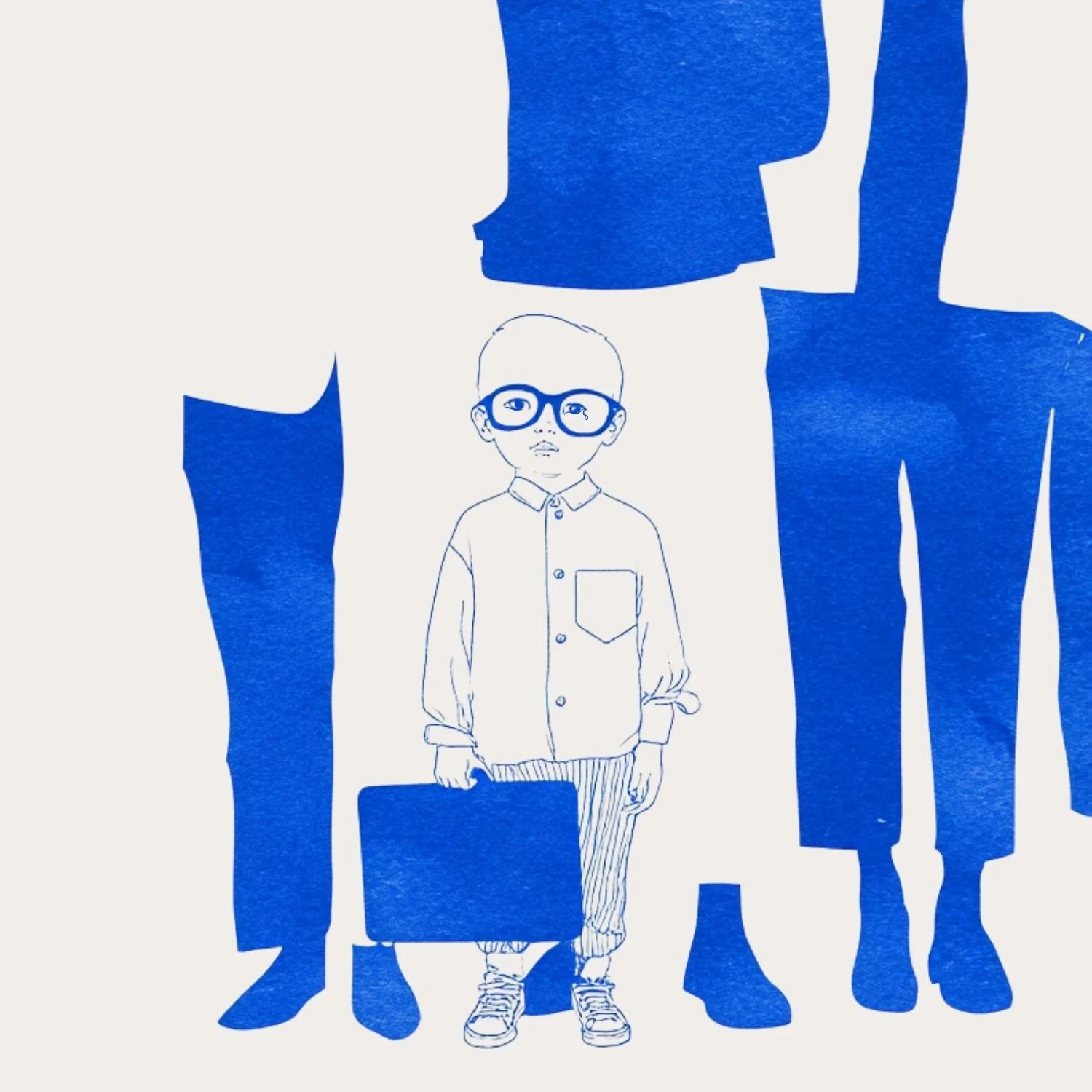
The term was first coined in the 1970s by Suzanna Imes and Pauline Rose Clance to describe an internal experience in which a person believes they are inadequate or incompetent, despite external evidence suggesting otherwise (2). Put more simply, imposter syndrome is the feeling of being a fraud and the worry that you will eventually be found out.
Imposter syndrome in expat life
For many expats, moving abroad can amplify imposter feelings because suddenly you are thrust into a new environment with new demands. For example, you might need to rebuild your professional identity, work in a second or third language or adjust to new reference points for competence and performance. In this new context, it can be difficult to feel confident and that you’re enough, even when externally it might seem that you’re doing well.
What are the characteristics of imposter syndrome?
Some common signs of imposter syndrome include:
Dwelling on small mistakes
Doubting or downplaying your abilities
Difficulty realistically recognising your strengths
Attributing success to luck or external factors
Being very sensitive to feedback or criticism
Fear of disappointing others
Overworking or overcompensating
Holding yourself to very high standards
Dismissing praise as “just kindness”
These feelings can persist, no matter how much education, experience or achievement you accumulate, and over time they can negatively impact wellbeing. It has also been suggested that imposter syndrome can contribute to chronic stress, which can further maintain self-doubt (3).
The imposter cycle
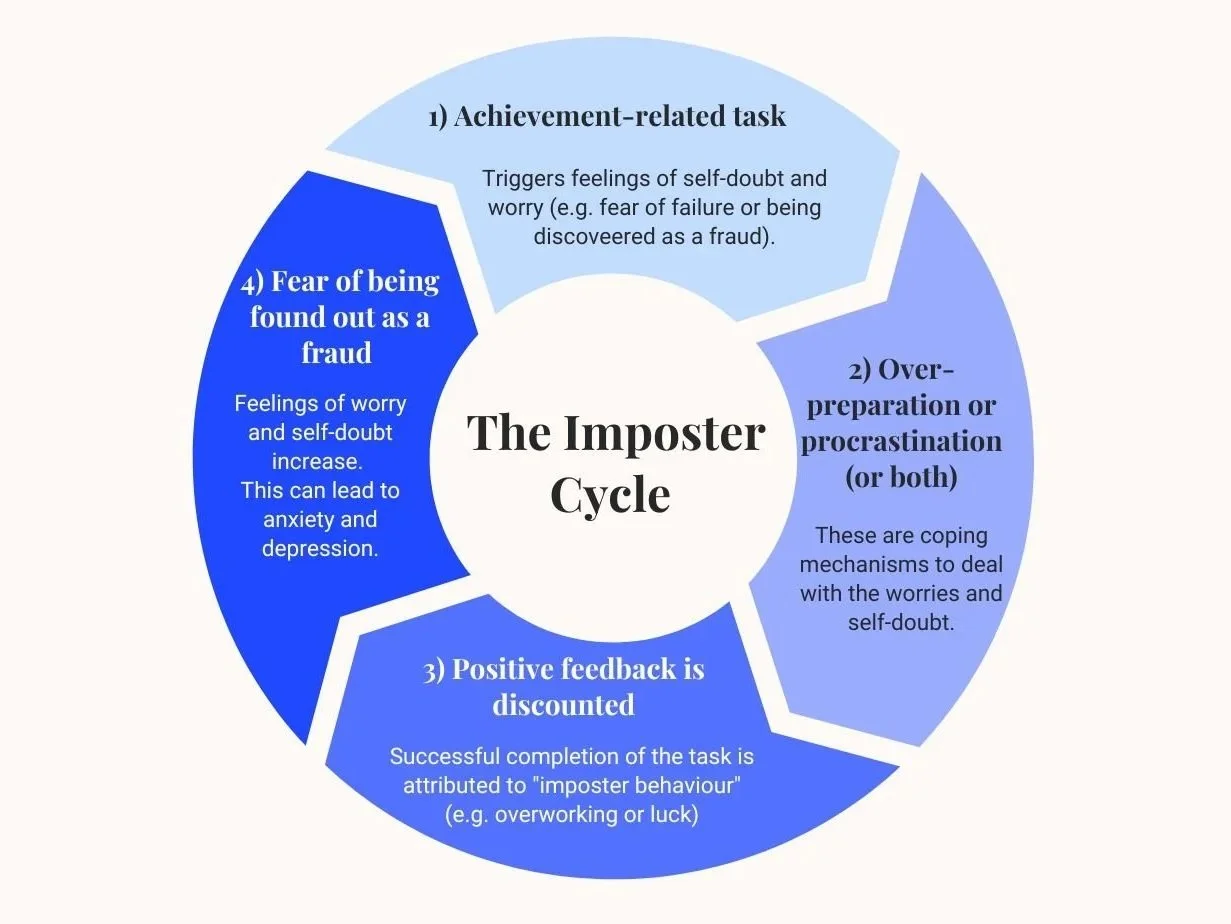
To explain how imposter syndrome persists, psychologist Pauline Rose Clance described the “imposter cycle” (4).
The cycle often begins when you are faced with an achievement-related task, such as an assignment, a work project, or speaking at an event. This triggers self-doubt and anxiety.
To manage these uncomfortable feelings, people often respond in one of two ways:
over-preparing and spending far more time than necessary, or
procrastinating to avoid the task altogether because of fear of failure or not meeting high internal standards
If the task goes well, you may feel temporary relief, but often discount positive feedback afterwards. For example, praise might be dismissed or attributed to “imposter behaviours” such as overworking or simply luck. This maintains the underlying sense of fraudulence.
If the task does not go well, it can reinforce the belief that you are inadequate.
Either way, the cycle continues.
Who experiences imposter syndrome?
When the term was first introduced in the 1970s, it was thought to apply mainly to high-achieving women. However, subsequent research has shown that imposter syndrome can occur across all genders, ages, backgrounds, professions and skill levels (5).
However, it may be more common among:
high-achievers
perfectionists
women
ethnic minorities
people in transition or relocation
How does imposter syndrome develop?
There is no single cause of imposter syndrome. Instead, it tends to emerge from a combination of personality traits and particularly formative experiences.
1) Upbringing and childhood experiences
Certain aspects of childhood, such as family dynamics, parenting styles and school experiences, can contribute to later imposter feelings.
For example, research has found that imposter syndrome is more common in people who experienced controlling or overprotective parenting (6). Similarly, inconsistent messages from caregivers, such as alternating between excessive praise and harsh criticism, may increase vulnerability to later self-doubt (7).
Growing up in environments that place strong emphasis on achievement can also contribute to internalising the belief that “in order to be loved, I need to do well”.
Additionally, some people who experienced early academic success may later struggle when they are no longer at the top of the class, which can lead to feelings of not belonging or not being “good enough”.
2) Personality traits
Research suggests that certain personality traits may make imposter feelings more likely:
Perfectionism: feeling that everything must be done flawlessly, and finding it difficult to ask for help because it implies imperfection.
Low self-efficacy and self-esteem: lacking confidence in your abilities, which can make achievements feel undeserved.
Neuroticism: a tendency towards anxiety, self-doubt and emotional sensitivity, which has been linked to imposter feelings (5).
3) New challenges and transitions
Imposter feelings are also more likely when you are entering new environments or roles (8), such as starting university, moving abroad, beginning a new job, or launching a business.
These transitions often involve:
unfamiliar expectations
a temporary lack of confidence or experience
increased pressure to perform
All of this can understandably bring up feelings of not belonging or self-doubt.
4) Bias, stereotypes and discrimination
Although imposter syndrome was initially thought to mainly affect women, research now highlights the importance of context in understanding these experiences.
Tulshyan and Burey (9) argue that “imposter syndrome puts the blame on individuals, without accounting for the historical and cultural contexts that are foundational to how it manifests”, and that it can shift attention away from the environments that contribute to these feelings.
In addition, discrimination and stereotypes, whether related to gender, ethnicity, sexuality or other aspects of identity, can intensify feelings of not belonging. When people are aware of negative stereotypes about them, they may feel increased pressure to prove themselves, while also experiencing reduced confidence and more self-doubt.
Ultimately, as these authors highlight, it is important not only to focus on individual coping strategies but also to acknowledge the environments in which these experiences develop.
Takeaways
As with most psychological and behavioural patterns, there is no single cause of imposter syndrome. Instead, it is typically shaped by a combination of our personality, experiences and life context. What tends to keep it going is not only where it came from, but especially how we keep responding to it in the present.
In the next post, we explore how you can start working with your imposter feelings, instead of fighting them, so that they have less of a hold on you.
References
Bravata, D. M., Watts, S. A., Keefer, A. L., Madhusudhan, D. K., Taylor, K. T., Clark, D. M., ... & Hagg, H. K. (2020). Prevalence, predictors, and treatment of impostor syndrome: a systematic review. Journal of General Internal Medicine, 35(4), 1252-1275.
Clance, P. R., & Imes, S. A. (1978). The imposter phenomenon in high achieving women: Dynamics and therapeutic intervention. Psychotherapy: Theory, research & practice, 15(3), 241.
Chrousos, G. P., Mentis, A. F. A., & Dardiotis, E. (2020). Focusing on the neuro-psycho-biological and evolutionary underpinnings of the imposter syndrome. Frontiers in Psychology, 11, 1553.
Clance, P. R. (1985). The impostor phenomenon: Overcoming the fear that haunts your success. Peachtree Pub Limited.
Li, S., Hughes, J. L., & Thu, S. M. (2014). The Links Between Parenting Styles and Imposter Phenomenon. Psi chi journal of psychological research, 19(2).
Langford, J., & Clance, P. R. (1993). The imposter phenomenon: Recent research findings regarding dynamics, personality and family patterns and their implications for treatment. Psychotherapy: theory, research, practice, training, 30(3), 495.
Feel like a fraud? By Kirsten Weir - American Psychological Association (APA)
Stop Telling Women They Have Imposter Syndrome. By Ruchika Tulshyan and Jodi-Ann Burey - Harvard Business Review
Cokley, K., McClain, S., Enciso, A., & Martinez, M. (2013). An examination of the impact of minority status stress and impostor feelings on the mental health of diverse ethnic minority college students. Journal of multicultural counseling and development, 41(2), 82-95.