
Burnout: what it is and how to spot it
Burnout is becoming an increasingly common occupational hazard for many professionals. Since many of us spend a large part of our lives working, an overwhelming or emotionally draining job can quickly begin to affect our wellbeing, motivation, relationships and overall quality of life. If left unaddressed, burnout can make it very difficult to function both personally and professionally. With this in mind, recognising the early signs of burnout can be an important first step towards slowing down and seeking support.
Firstly, what is burnout?
According to the International Classification of Diseases (ICD-11), burnout results “from chronic workplace stress that has not been successfully managed”. Burnout tends to develop when there is an ongoing mismatch between the demands being placed on us and the internal and external resources available to meet them, such as support, coping strategies, boundaries, and time for recovery. Over time, this can lead to a range of physical and psychological symptoms that significantly impact wellbeing and daily functioning.
It’s important to note that while burnout is primarily associated with work, many people also experience burnout in caregiving roles, academic settings, or during prolonged periods of emotional strain and adaptation.
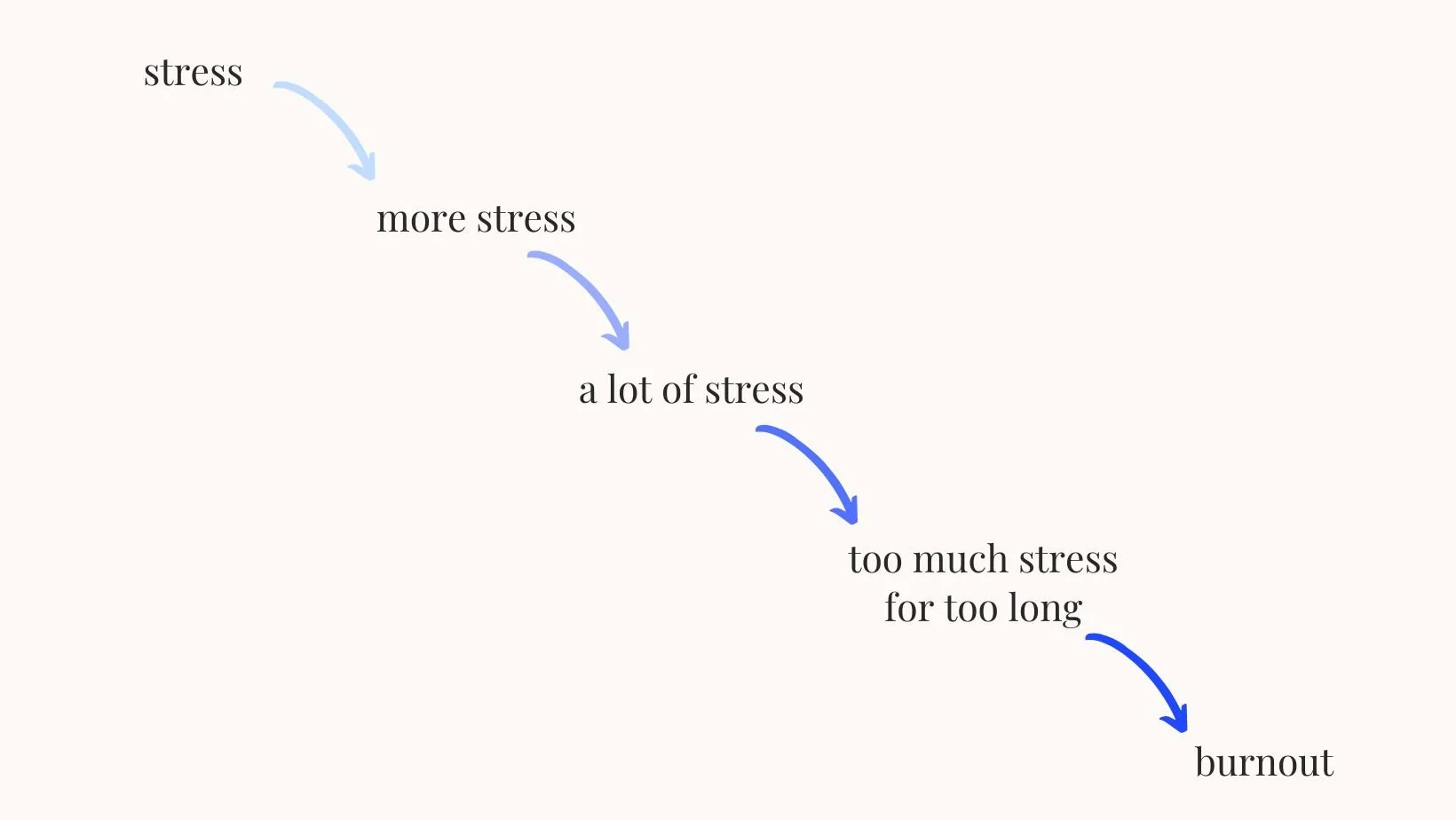
How does burnout differ from being stressed?
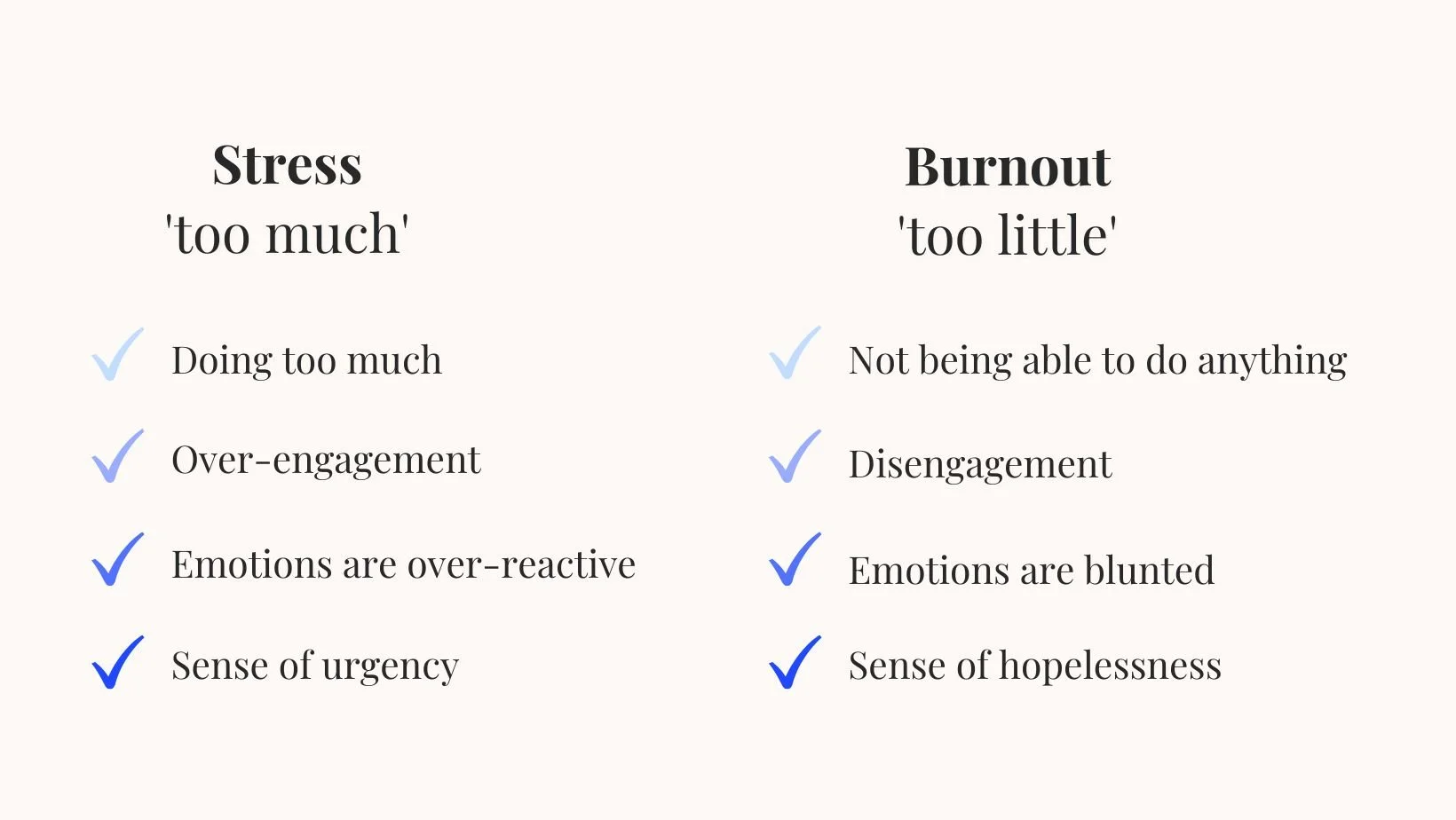
When we are stressed, we may feel overwhelmed or under pressure, but there is often still a sense that things can improve or become manageable again. This can drive people to push harder to try to stay on top of things.
Burnout, on the other hand, tends to develop when stress becomes chronic, and there has been too little opportunity for recovery over a long period of time. Rather than mobilising more energy, the body and mind begin to shut down and conserve energy instead. This can leave a person feeling exhausted, detached and hopeless.
Burnout not only makes it difficult to continue functioning at the same pace as before, but even small everyday tasks can begin to feel draining and overwhelming. Essentially, it grinds you to a complete halt.
Signs that you may be experiencing burnout
Burnout usually develops gradually rather than overnight, which can make it difficult to recognise in its early stages. Often, people only realise something is wrong once they feel deeply exhausted or unable to cope in the ways they previously could.
At the same time, our minds and bodies often give us signals earlier on that something is no longer sustainable. Becoming more aware of these signs can help us respond earlier and with more care. Although burnout looks slightly different for everyone, these are some common signs:
1) Chronic fatigue
One of the main signs of burnout is ongoing exhaustion and low energy. This can be emotional, mental and/or physical, and may begin to affect even small daily tasks, such as getting dressed, replying to messages or buying groceries.
2) Neglecting your own needs
When we are chronically stressed or burned out, it can become harder to care for ourselves consistently.
You may find yourself:
relying heavily on caffeine or alcohol
struggling with sleep
moving less
eating irregularly
withdrawing from activities that usually help you feel grounded or connected
While these behaviours may bring short-term relief or numbness, over time, they often intensify exhaustion and disconnection.
3) Physical symptoms
Burnout affects the body. Physical symptoms may include:
headaches
muscle tension or pain
digestive difficulties
shortness of breath
heart palpitations
becoming ill more frequently
However, these symptoms can also be linked to medical conditions, so it is important to speak with a healthcare professional if you are concerned.
4) Sleep difficulties
Initially, sleep problems may involve occasional difficulty falling asleep or waking during the night. Over time, this can develop into more persistent insomnia, where restful sleep becomes increasingly difficult despite feeling exhausted.
5) Cognitive difficulties
Ongoing stress and exhaustion can affect concentration, memory, decision-making and problem-solving. When the nervous system is in a prolonged state of stress, attention often narrows towards perceived threats or pressures, making it harder to think clearly or focus on other areas of life.
6) Reduced productivity and performance
You may feel as though no matter how much you do, you can never catch up. Tasks that once felt manageable can begin to require far more effort, partly because exhaustion and cognitive overload reduce your capacity to function effectively.
7) Increased irritability
Burnout can leave people feeling emotionally depleted, frustrated or overwhelmed, which may increase irritability or emotional reactivity. Sometimes this can show up externally as anger or conflict, while other times it appears more quietly as shutting down.
8) Interpersonal difficulties
Relationships require energy, attention and emotional presence. When someone is burned out, these can become harder to access. This may lead to:
increased conflict or tension
withdrawing from others and isolating yourself
feeling emotionally unavailable
9) Detachment
As work responsibilities become increasingly overwhelming, people may begin to feel emotionally disconnected or numb.
You might notice yourself:
avoiding emails or calls
cancelling plans
taking more sick days
Sometimes detachment can take the form of an “escape fantasy”, where you feel a strong urge to run away from your environment and responsibilities.
10) Cynicism and pessimism
Burnout can leave people feeling disillusioned and emotionally disconnected from things that once mattered to them. You may find yourself increasingly cynical about work, colleagues, responsibilities or life in general, or frequently wondering “what’s the point?”
11) Loss of satisfaction and enjoyment
At first, chronic stress may simply leave you feeling dissatisfied or emotionally disconnected in your work. Over time, this can develop into a broader loss of enjoyment or meaning across different areas of life. For example, no longer taking part in hobbies that you once enjoyed.
12) Low mood
Research suggests that burnout and depression are closely linked, and prolonged job strain may contribute to depression through burnout.
Signs of low mood can include:
sadness or emptiness
hopelessness
low self-esteem
negative self-talk
increased tearfulness or emotional numbness
While everyone experiences low mood at times, persistent symptoms may indicate depression. If this resonates with you, consider reaching out to your GP or working with a therapist.
Takeaways
If you found yourself recognising some of these signs, this may be an opportunity to pause and reflect with curiosity rather than self-criticism.
What have your stress levels been like recently?
What impact are they having on your body, relationships and wellbeing?
What might these signs be trying to communicate?
In Gestalt therapy, part of the work involves becoming more aware of your patterns, boundaries, needs and ways of coping. Often, recognising that something is no longer sustainable is the beginning of change.
Resources & References
Mindtools Burnout Self-Test is a short online assessment that can give you an indication of whether you are at risk for burnout.
Bauer, J., Häfner, S., Kächele, H., Wirsching, M., & Dahlbender, R. W. (2003). The burn-out syndrome and restoring mental health at the working place. Psychotherapie, Psychosomatik, medizinische Psychologie, 53(5), 213-222.
Freudenberger, H. J. (1975). The staff burn-out syndrome in alternative institutions. Psychotherapy: Theory, Research & Practice, 12(1), 73.
Kahill, S. (1988). Symptoms of professional burnout: A review of the empirical evidence. Canadian Psychology/Psychologie canadienne, 29(3), 284.
Shirom, A. (2003). Job-related burnout: A review.
Weber, A., & Jaekel-Reinhard, A. (2000). Burnout syndrome: a disease of modern societies?. Occupational medicine, 50(7), 512-517.